A Mean-Reversion Model for US Sectors
Exploiting Price-Reversal Opportunities Through Liquid ETFs

Last week, inspired by the sector rotation we have recently observed across financial markets, we introduced a short-term mean-reversion framework applied to three industry ETFs.

The positive response from readers naturally led us to a broader question:
Can the same idea be extended into a diversified portfolio of sector ETFs?
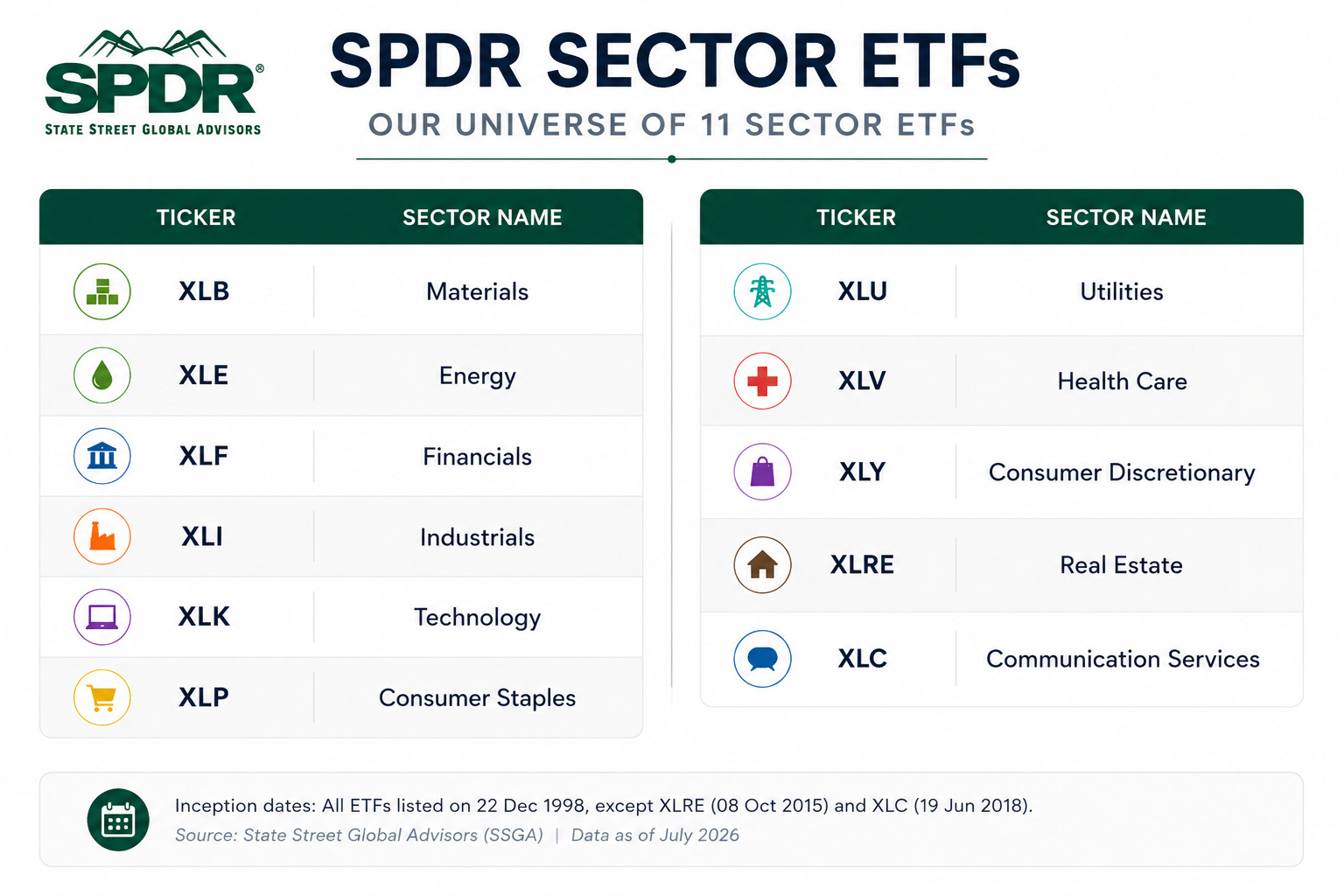
In this article, we apply the exact same framework to the complete universe of eleven SPDR Sector ETFs, creating an actively managed portfolio that dynamically allocates capital only when statistically significant reversal opportunities emerge.
The results are encouraging.
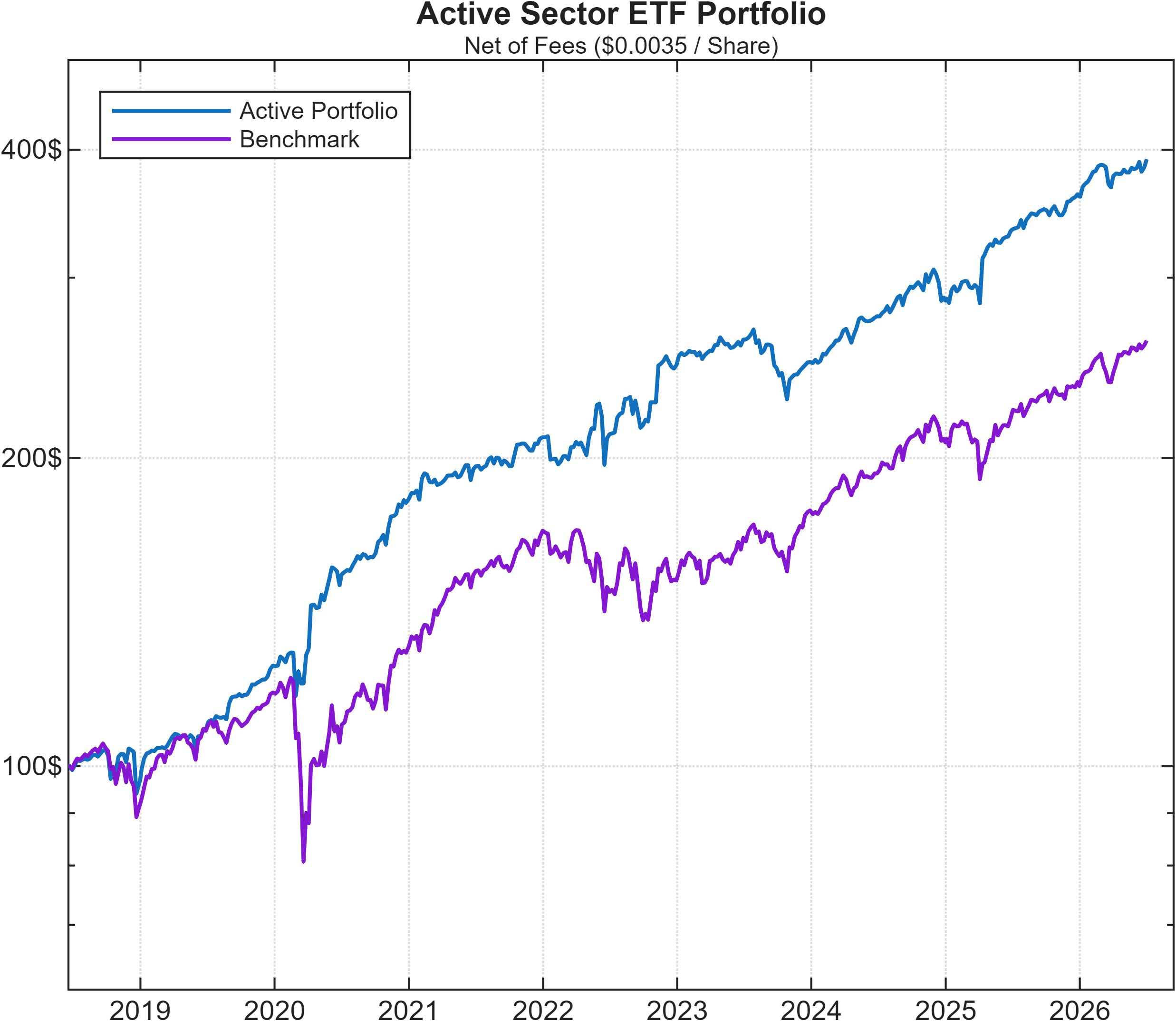
Over the period from June 2018 through early July 2026, the strategy compounds at 18.5% per year after transaction costs, comfortably outperforming a passive equal-weight benchmark, which returns 12.6% annually over the same period.
At the same time, it improves the portfolio’s Sharpe ratio from 0.75 to 1.33, reduces the maximum drawdown from -36.3% to -14.7%, and achieves these results while deploying only 58% of its capital on average, leaving a substantial portion unallocated throughout much of the sample.
For simplicity, we do not account for the interest that this idle cash could have earned, meaning the reported returns are likely conservative.
In the remainder of this article, we unpack the full methodology behind the strategy, examine the empirical behavior supporting the signal, and show how the individual trades are combined into a diversified portfolio. We then evaluate its performance after transaction costs, capital usage, and resilience across different market environments.